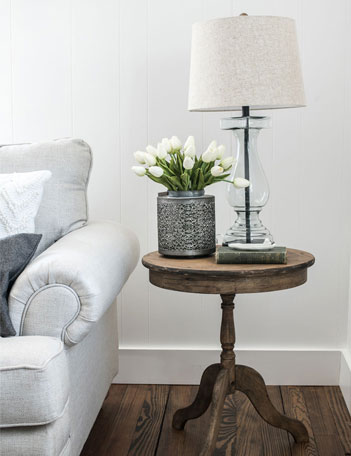
Love the look of reclaimed wood accent tables, but don't want to pay the price? Using antiquing wax, this second-hand end table got a makeover to very much resemble those pricier options available new at the store.
CREATE | Updated November 15, 2024

Unfortunately, nowdays new furniture is expensive.
While I fully support investing in quality for pieces like a sofa, dining table, or mattress, second-hand is a great choice for smaller, more occasional furniture choices.
Accent chairs, bedside tables, or dressers are typically plentiful in thrift stores and antique shops. While they may not look exactly as you'd hope when you buy them, they can be just as nice as you'd find in Pottery Barn, Arhaus, or Restoration Hardware after a little love and DIY.
Old furniture is most often better constructed, so oftentimes your refinished piece will be even better than what you can buy at the store now.

Years ago, my mom offered me this small accent table she didn't want anymore.
It's been in storage ever since, but as I was recently planning my living room remodel, I realized the table's shape was an almost exact replica of a World Market table I had pinned that was close to $200. Other similar versions are even more expensive than that!
The top of the table had seen better days and the original factory finish was worn away in many places. But it's structure was sturdy and undamaged making it perfect choice for a simple makeover.
In this post, I'm going to show you exactly what I did to easily transform this worn piece of furniture and how you can do it, too!

Did you know that most times, underneath the factory stained finish on things like the legs of upholstered chairs or coffee tables, there is real wood?
Which means that just as you can sand back the finish of an old antique dresser to refinish, you can sand newer furniture to paint or stain as well whether it is damaged or just in need of a style upgrade.
This project was a quick start to finish transformation, but made such a difference both in restoring the damaged top and in making the end table fit better into today's more rustic, natural wood style.
WANT A NATURAL WOOD ACCENT TABLE, BUT DON'T WANT TO DIY?
HERE ARE A FEW OF MY FAVORITE OPTIONS TO BUY
Click the left and right arrows to scroll through the different side tables.
Click the left and right arrows to scroll through the different side tables.


I used my Ryobi Orbital Sander with an 80-grit piece of sandpaper to sand the top and other flat surfaces of the table and legs, followed by a 120-grit sanding to further smooth the surface. Ideally, you want to start at a higher grit (like 60 or 80) and gradually work your way to a finer grit like the 120 so that you don't leave marks on the surface, but I wanted this project to be quick, the table to be rustic, and it all turned out fine.
I did the center spindle and around the edges of the table by hand using the same grits of paper.
The whole sanding project can be done by hand, though, if you don't have an orbital sander. The result will be the same....it will just take longer and require a little more work on your part.
IF YOU DO A LOT OF SANDING PROJECTS: This is my go-to sand paper....works better than other brands and lasts a lot longer, too.

After the finish was removed, I wiped the entire table with a clean tack cloth to remove the dust from the wood. These cloths are ant-static and attract dirt, dust, and sawdust without leaving a residue.
When refinishing any piece of wood furniture, you want to be sure that you have a clean surface to work with. Dust can add imperfections into your painted or stained surface.

I used a cotton rag to apply creamy antiquing wax to the wood, rubbed it on, and then used a clean cotton rag to remove the excess. I worked in small sections so that I could be sure to get the wax off before it started to dry.
The wax soaks into the end table effectively staining it a darker color and settling into the grain and crevices of the wood.
NOTE: When this post was written, I used Miss Mustard Seed's Antiquing Wax. She now has multiple "colors" available, so be sure that you are buying the Antiquing Wax and not Saddle Brown. I'm also not sure if the formulation is the same. Another Antiquing option is made by Amy Howard.
If you'd like your reclaimed wood finish to be a bit distressed, you can gently sand areas that would wear naturally with a 120-grit sandpaper now. I chose to leave my table as-is with the new finish, but a bit of sanding does enhance the aged look.
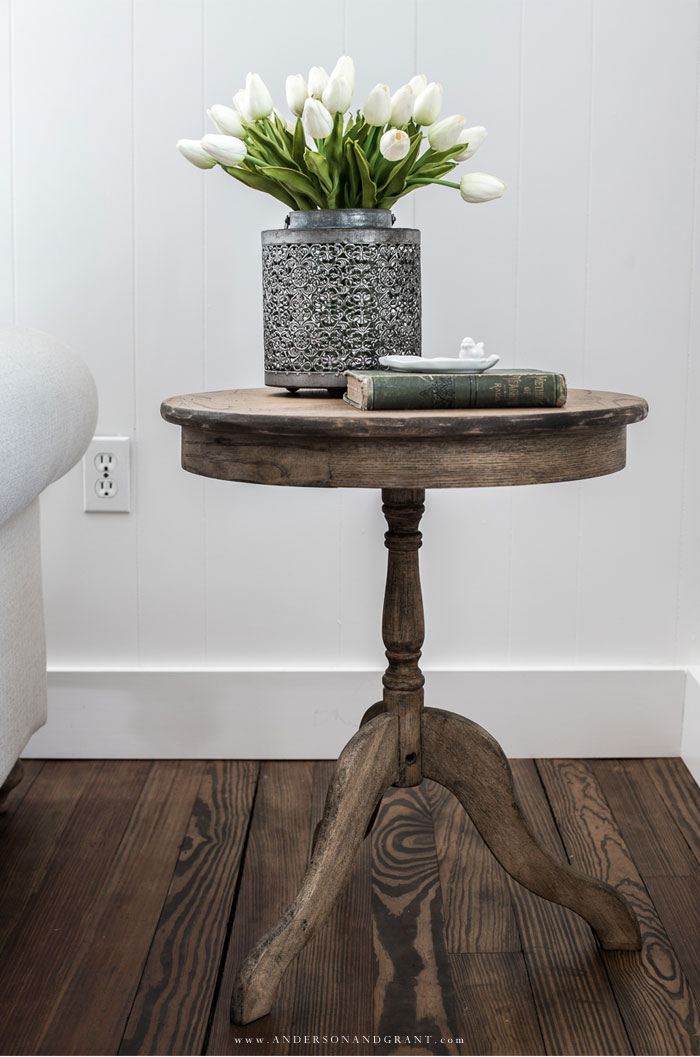

When the table had been fully "stained" with the wax and had time to dry, I went back over the entire piece rubbing in circles with another clean cotton rag to buff the finish to a bit of a sheen.
I really love the natural look that the wood maintains using the antiquing wax, as opposed to using stain. Awhile back, I posted how I gave an aged look to a natural wood dough bowl I had bought at Hobby Lobby. Using the wax, you're still able to maintain the feel of the bare wood, and it settles into cracks and imperfections really adding to the old patina you're trying to achieve.
This discarded side table is a good example of how a little sanding and refinishing can give you a very high end look for little or no money. In almost no time at all, I had a piece of furniture that could rival other pricey versions.
Much like my DIY aged stoneware planter , it is possible to reuse what you have to make your own on-trend home decor for much less than you'd pay for new.
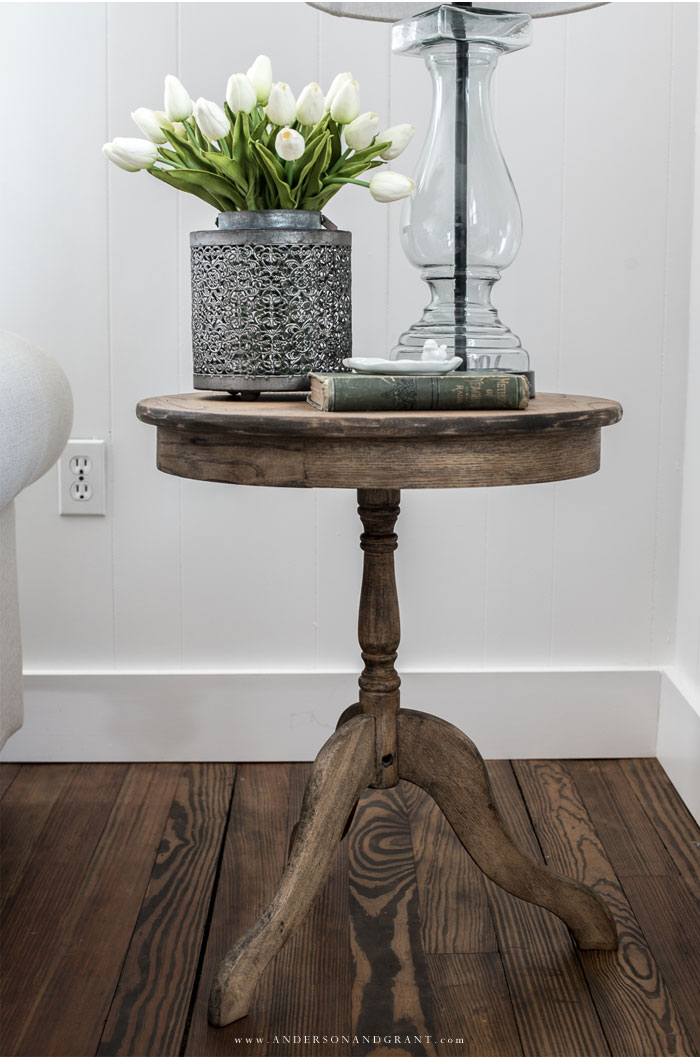
HOW TO ACHIEVE A RECLAIMED WOOD LOOK USING ANTIQUING WAX
SUPPLIES
- Orbital palm sander (optional)
- 80-grit sandpaper (I recommend the Tiger Shark brand)
- 120-grit sandpaper
- Tack cloth
- Cotton rags (I like to use old t-shirts cut into squares)
- Creamy antiquing wax (I have always used and loved Miss Mustard Seed's Antiquing Wax)
INSTRUCTIONS
STEP 1: Sand the original factory finish from your wood end table using an orbital palm sander or by hand with sandpaper. Start with an 80-grit coarse paper to remove the stain, followed by a 120-grit paper to smooth the surface.STEP 2: Dust off the surface of your table and wipe the entire table with a clean tack cloth to fully remove the dust and dirt.
STEP 3: Use a clean cotton rag to apply a small amount of antiquing wax onto the surface of your table. Fully rub it in and then wipe the excess off of the surface with a clean cotton rag. Continue this process until the entire table has been "stained" with the antiquing wax. All the table to dry fully.
STEP 4: Take a clean cotton rag and rub in small circles over the whole table to buff the surface to a slight sheen.
Other Posts You Might Love
DIY Reclaimed Wood Console Table - See how I used scrap boards to construct an entryway table inspired by a $2500 Restoration Hardware one!
Vintage Cane Back Chair Makeover - An old upholstered chair is given a completely new look with paint and upholstery.
Repurposed Dining Room Buffet - A vintage dresser missing a drawer is repurposed into a stylish dining room sideboard.
Outdoor Side Table - A plant stand is updated to be used as an outdoor side table.
Twine Footstool - One of my most popular DIYs.....You'll never believe how this old wood footstool was updated with just some sanding and twine!
LOVE THIS PROJECT?
Be sure to join the anderson + grant mailing list to get all the tips, projects, and recipes for making your house feel more like home delivered right to your inbox.
Please click on the image below to share it to Pinterest. Not only can you easily refer back to it, you'll help me spread the word so that others will benefit from the post as well!

