
Learn how to make the best no-fail flaky butter pie crust from scratch for your fruit or cream pies, tarts, pot pies, quiche, or more.
COOK + BAKE | Updated August 18, 2025

COOK + BAKE | Updated August 18, 2025
There’s nothing quite like the first bite of a pie with a crust so flaky it practically shatters under your fork, revealing the rich, buttery layers within.
For many bakers, that perfect texture feels a bit impossible, but I promise, it’s a skill you can master.
In this guide, I’m sharing everything you need to know about making a flaky pie crust with butter - no shortening, no guesswork, no complicated techniques. Just a straightforward, time-tested method that works every single time.
You’ll learn the why behind each step, the small details that make the biggest difference, and my best tips for ensuring your buttery pie crust bakes up beautifully golden and melt-in-your-mouth tender.
If you’ve struggled with pie crust in the past or simply want a recipe you can rely on for years to come, consider this your new go-to. By the time we’re done, you’ll be able to roll out your dough with confidence and bake pies that look and taste like they came straight from a bakery.

What Makes a Butter Pie Crust Different?
Pie crusts come in many varieties, featuring combinations of fats like shortening, lard, or even oils. But when you choose to make your crust with butter alone, you’re embracing a classic that’s prized for its rich flavor and tender texture.
Butter contains water and milk solids, which contribute to both taste and the flaky layers you crave. The water turns to steam during baking, helping to create delicate pockets that give the crust its signature flakiness. Meanwhile, the milk solids encourage beautiful browning and a buttery aroma that fills your kitchen.
While shortening can yield a slightly sturdier crust and lard produces a tender, flaky result, neither can quite match the depth of flavor butter brings. That said, butter-based doughs require a bit more care, especially when it comes to keeping everything cold, to prevent the butter from melting prematurely and to ensure that flaky, melt-in-your-mouth texture.

Essential Ingredients for a Flaky Butter Pie Crust
The beauty of a truly great pie crust is that it comes together with just a handful of very basic ingredients, each one playing a vital role in creating that tender, flaky texture we all love.
- All-Purpose Flour – The structure of your crust begins here. All-purpose flour strikes the perfect balance between protein (for strength) and starch (for tenderness), making it ideal for a crust that holds its shape while still being delicate.
- Unsalted Butter – The star of this recipe. Butter adds rich flavor and creates those coveted flaky layers as the water in the butter turns to steam during baking. Using unsalted butter gives you complete control over the seasoning.
- Salt – Just a pinch makes all the difference, enhancing the flavor of the butter and balancing the richness of the crust. Without it, the dough can taste flat.
- Granulated Sugar (Optional) – A touch of sugar brings a subtle sweetness and encourages even browning. While not essential, it’s a lovely addition for fruit pies or dessert tarts.
- Ice Water – The secret to keeping your butter cold until it reaches the oven. Ice water helps bind the dough together without warming the butter, ensuring your crust stays flaky instead of tough.
SHOP: Find my handpicked pie making tools gathered all in one place.
How to Make Pie Crust Dough by Hand
Making pie crust by hand allows you to feel the dough as it comes together, giving you more control over the texture. It is my preferred method.
STEP 1: Mix the Dry Ingredients – In a large mixing bowl, whisk together the flour, salt, and sugar until evenly combined.
STEP 2: Cut in the Butter – Add cold, cubed butter to the bowl and toss to cover with flour. Using a pastry cutter (or your fingers) quickly cut the butter into the flour until the mixture resembles coarse crumbs with pea-sized bits of butter throughout.
STEP 3: Add the Ice Water – Drizzle in a few tablespoons of ice water at a time, stirring with a rubber spatula or your hands until the dough comes together. Add just enough water for the dough to hold together when pressed. Too much will make it tough.
STEP 4: Bring It Together – Use your hands to gently gather the dough into a ball, being careful not to knead it. Overworking the dough can make it dense.
STEP 5: Chill Before Rolling – Flatten the dough into a 1-inch thick disk, wrap it tightly in plastic wrap, and refrigerate for at least 1 hour. This allows the gluten to relax and the butter to firm back up, which is essential for a tender, flaky crust.
The food processor method is fast, efficient, and great for keeping your butter cold.
STEP 1. Combine the Dry Ingredients – Add the flour, salt, and sugar (if using) to the bowl of a food processor. Pulse a few times to mix.
STEP 2: Add the Butter – Scatter the cold, cubed butter over the flour mixture. Pulse 8–10 times in short bursts until the butter is broken down into pea-sized pieces.
STEP 3: Incorporate the Ice Water – With the machine running, drizzle in the ice water through the feed tube, starting with the smaller amount and adding more only if needed. Stop as soon as the dough begins to clump together.
STEP 4: Form and Chill – Turn the dough out onto a lightly floured surface, gently press it into a disk, wrap in plastic wrap, and refrigerate for at least 1 hour before rolling.
STEP 1. Combine the Dry Ingredients – Add the flour, salt, and sugar (if using) to the bowl of a food processor. Pulse a few times to mix.
STEP 2: Add the Butter – Scatter the cold, cubed butter over the flour mixture. Pulse 8–10 times in short bursts until the butter is broken down into pea-sized pieces.
STEP 3: Incorporate the Ice Water – With the machine running, drizzle in the ice water through the feed tube, starting with the smaller amount and adding more only if needed. Stop as soon as the dough begins to clump together.
STEP 4: Form and Chill – Turn the dough out onto a lightly floured surface, gently press it into a disk, wrap in plastic wrap, and refrigerate for at least 1 hour before rolling.
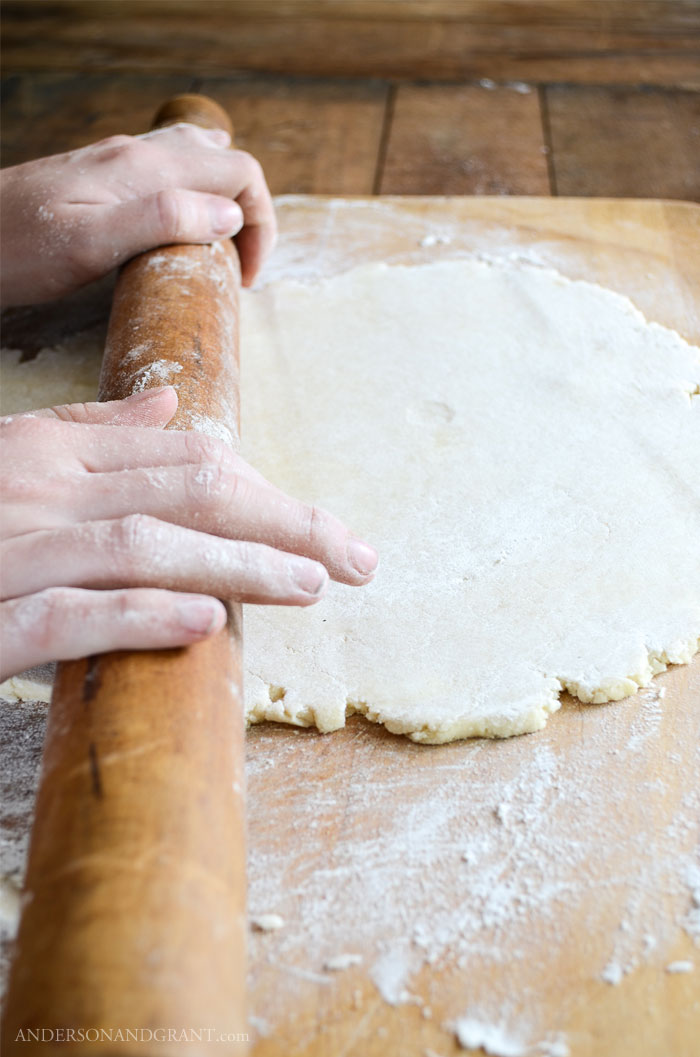
Rolling and Transferring Your Pie Crust
STEP 1: Prepare Your Work Surface – Lightly flour your countertop or pastry board and rolling pin to prevent sticking. Keep extra flour nearby, but use it sparingly. Too much can toughen the dough.
STEP 2: Start from the Center – Place the chilled dough disk on the floured surface. Roll from the center outward, rotating the dough a quarter turn after each roll to keep it even and prevent sticking.
STEP 3: Aim for Even Thickness – Roll until the dough is about ⅛ inch thick and 2–3 inches wider than your pie plate.
STEP 4: Check for Sticking – Gently lift the dough now and then to make sure it’s not sticking to the counter, adding a little more flour if necessary. Put the dough back into the refrigerator for a few minutes if it starts to feel too warm.
STEP 5: Transfer and Fit Without Stretching – Carefully fold your dough or roll it around the rolling pin to transfer it to the pie plate. Then ease the dough into the bottom and sides of the plate without stretching it, which can cause shrinkage during baking.
STEP 6: Trim the Excess Dough – Leave about a ½-inch overhang around the edge of your pie plate. Use kitchen shears or a sharp knife to trim the excess dough evenly.
STEP 7: Crimp Your Edges – Fold the overhang under itself, pressing gently to form a thicker edge that will hold its shape during baking. Then finish with a simple pinched edge or press the tines of a fork into the dough to create a decorative pattern.
STEP 8: Chill Before Baking – For best results, refrigerate your crust for 15–30 minutes before baking to help it hold its shape and prevent shrinking.
Frequently Asked Questions About Flakey Butter Pie Crust
Can I use salted butter instead of unsalted?
While unsalted butter gives you full control over the saltiness of your crust, salted butter can be used. Just reduce or omit the added salt in the recipe to avoid over-seasoning.
How cold does my butter need to be?
Your butter should be very cold, straight from the fridge and cut into small cubes. Some bakers even freeze it briefly before using. Keeping the butter cold ensures those flaky layers form during baking.
Can I make this dough ahead of time?
Absolutely! Pie dough can be wrapped tightly and refrigerated for up to 3 days or frozen for up to 3 months. Just thaw it overnight in the fridge before rolling.
Should I blind bake the crust?
It depends on your filling. For custard or cream pies, blind baking helps prevent sogginess. For fruit pies, it’s usually not necessary unless you want a crisper bottom crust.
Can I substitute margarine for butter in this pie crust?
While you can use margarine as a substitute, it won’t deliver the same rich flavor or flaky texture that butter provides. If you do choose margarine, look for one labeled “stick margarine” (not tub) for the best results, and keep everything as cold as possible.
A perfectly flaky butter pie crust isn’t just a skill to check off your baking list. It’s a foundation you’ll return to again and again, for holidays, celebrations, and the quiet moments in between.
Once you’ve mastered this recipe, you’ll have the confidence to make pies that are as beautiful as they are delicious, without the stress or uncertainty. Keep this recipe close, use it often, and let it become part of your own kitchen story, one buttery, golden layer at a time.
Ready to Bake?
Now that you’ve mastered the art of a flaky butter pie crust, it’s time to fill it with something delicious. Here are some of my favorite pies that showcase this buttery crust:
- Pumpkin Pie — Intensely spiced and creamy, this classic fall favorite is a must for cozy gatherings.
- Blueberry Pie with Twisted Lattice Crust — Sweet, juicy blueberries peek through a charming handmade lattice crust, adding a touch of rustic elegance.
- Pecan Pie (Coming Soon) — Rich, nutty, and decadently sweet, this Southern staple is sure to impress at any holiday table.
Click through to discover the full recipes and make your next pie unforgettable.
Flaky Butter Pie Crust Recipe
Makes one 9-inch pie crust
PRINT RECIPE
INGREDIENTS
- 1 1/4 cups all-purpose flour, plus more for rolling
- 1/2 teaspoon salt
- 1/2 teaspoon white granulated sugar
- 8 tablespoons (1 stick) unsalted butter, cut into 1/2 inch cubes and chilled
- 1/4 cup ice-cold water
INSTRUCTIONS
STEP 1: In a large bowl, whisk together the flour, salt, and sugar until evenly combined.
STEP 2: Add the chunks of cold, cubed butter and toss to coat in flour. Using a pastry blender or your fingers, quickly cut the butter into the flour until the mixture resembles coarse crumbs with pea-sized bits of butter throughout.
STEP 3: Drizzle in a few tablespoons of ice water at a time, stirring with a rubber spatula or your hands until the dough comes together. Add just enough water for the dough to hold together when pressed.
STEP 4: Gather the dough into a ball being careful not to knead it. Shape into a 1-in thick disk and wrap tightly in plastic wrap. Refrigerate at least 1 hour.
STEP 5: Lightly flour your work surface and roll the dough into a round that is 2-3 inches wider than your pie plate. Transfer the dough to your pie plate, then ease it into the bottom and sides without stretching.
STEP 6: Trim the dough, leaving a ½ inch overhand around the edges of the pie plate. Fold the overhand under itself, pressing gently to form a thicker edge, then crimp the crust along the rim.
STEP 7: For best results, refrigerate your crust for 15-30 minutes before baking to help it hold its shape and prevent shrinking.
STEP 8: For a double crust pie, add your filling, then carefully lay the second rolled dough over the top. Trim the edges of both crusts evenly, then fold the top edge under the bottom crust and crimp. Before baking, cut a few small vents in the top crust to allow steam to escape.


